 how-to
How to Protect Artwork from Light Damage
Table of Contents
- Understanding Light Damage to Artwork
- Museum Glass vs Standard Glass for Art
- UV Filtering Acrylic for Picture Frames
- Does Humidity Affect Archival Framing Quality
- Positioning and Placement to Minimise Light Exposure
- Choosing Archival Materials and Mounting Methods
- Monitoring and Maintenance for Long-Term Protection
- Frequently Asked Questions
Last Updated: September 18, 2026
Understanding Light Damage to Artwork
Light damage is one of the most significant threats to artwork preservation. Ultraviolet (UV) radiation and visible light both cause fading, discolouration, and deterioration of pigments, paper, and fabric over time. Once this damage occurs, it cannot be reversed.
Different materials respond differently to light exposure. Watercolours, photographs, textiles, and paper-based works fade fastest. Oil paintings and acrylic pieces are more resistant but still vulnerable. The damage accumulates gradually, you won't notice it happening, which makes prevention essential.
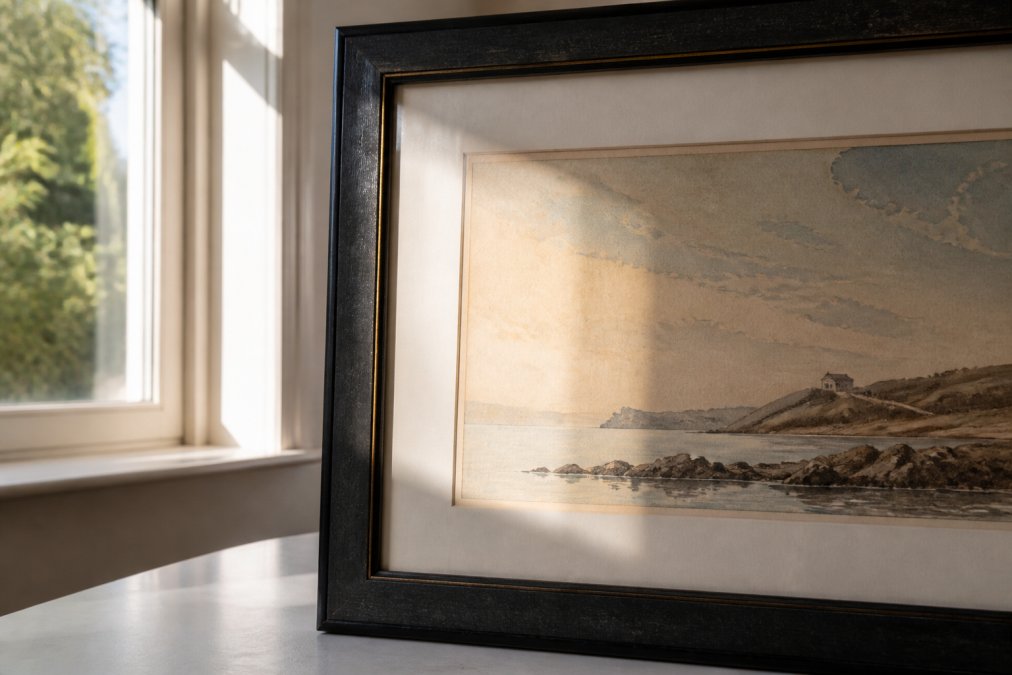
The intensity and duration of light exposure determine how quickly damage occurs. Direct sunlight causes rapid fading. Even ambient indoor light, over months and years, degrades artwork significantly. This is why proper framing and placement matter so much when you want to protect artwork from light damage.
Museum Glass vs Standard Glass for Art
When framing artwork, the choice between museum glass and standard glass fundamentally changes how well you protect artwork from light damage. Standard glass offers basic protection but transmits harmful UV radiation directly onto your piece.
Museum glass filters out 99% of UV radiation while maintaining colour accuracy and clarity. It prevents the yellowing that occurs with ordinary glass over time. The trade-off is cost, museum glass costs more than standard options, but the investment protects valuable pieces.
Standard glass provides minimal UV protection. It yellows with age, creating a hazy appearance. For sentimental or valuable artwork, standard glass is a false economy. You'll spend more replacing faded pieces than upgrading to better glazing from the start.
The difference becomes obvious after a few years. Artwork framed with standard glass shows visible fading. The same piece behind museum glass remains vibrant. For collectors and galleries, this distinction justifies the investment immediately.
UV Filtering Acrylic for Picture Frames
Acrylic offers an alternative to glass when framing artwork. UV-filtering acrylic blocks harmful radiation while remaining lightweight and shatter-resistant. It's particularly useful for large pieces or shadow boxes where weight matters.
Standard acrylic yellows over time and offers minimal UV protection. UV-filtering acrylic maintains clarity for decades. The material won't scratch as easily as glass, making it practical for high-traffic environments or pieces that need occasional cleaning.
Acrylic works well for photographs, prints, and paper-based artwork. It's less suitable for oils or acrylics, where glass provides better optical properties. When choosing between acrylic and glass, consider both the artwork type and your display environment.
The cost of UV-filtering acrylic falls between standard glass and museum glass. For budget-conscious collectors wanting reliable protection, it's a solid middle ground. We help clients select the right glazing material based on their specific artwork and display plans.
Does Humidity Affect Archival Framing Quality
Humidity levels directly impact how well archival materials preserve artwork. Fluctuating humidity causes paper, canvas, and wood to expand and contract. This movement stresses the materials and accelerates deterioration.
Stable humidity between 45-55% is ideal for most artwork. Levels below 30% cause brittleness and cracking. Levels above 65% encourage mould growth and foxing (brown spots) on paper. Maintaining this range prevents damage that light protection alone cannot address.
Archival mounting methods account for humidity changes. Acid-free materials don't degrade in response to moisture. Proper spacing between artwork and glazing allows air circulation, reducing condensation risk. When you protect artwork from light damage, you must also manage the environment around it.
Archival framing combines UV protection with humidity management. The materials work together to create a stable microclimate around your artwork. This integrated approach is what separates professional conservation framing from basic picture framing.
Positioning and Placement to Minimise Light Exposure
Where you hang artwork matters as much as how you frame it. Direct sunlight causes rapid fading, never display valuable pieces in south-facing windows or where sunlight strikes them for hours daily. Even bright indirect light accumulates damage over time.
Interior walls away from windows provide the safest environment. Hallways, bathrooms, and north-facing walls receive minimal direct light. If you must display artwork near windows, use curtains or blinds to filter light during peak hours.
Consider lighting when planning gallery walls or collections. Spread pieces across different walls rather than clustering them in one bright area. Rotate artwork periodically, moving pieces to darker locations for part of the year reduces total light exposure.
Artificial lighting affects artwork too. Incandescent bulbs emit heat and UV radiation. LED lights produce minimal UV and run cool. If you use spotlights or display lights, choose LED options and position them to illuminate without concentrating heat on the frame.
The combination of proper framing and smart placement creates maximum protection. A piece behind museum glass hung in a dim hallway will outlast the same artwork in standard glass near a window by decades.
Choosing Archival Materials and Mounting Methods
Archival materials are specifically designed to resist deterioration. Acid-free paper, boards, and adhesives won't yellow or degrade over time. They also won't transfer acidity to your artwork, which causes permanent damage.
When mounting artwork, use reversible methods. Archival tape, hinging systems, and mounting corners allow removal without damaging the piece. Permanent adhesives like standard glue or spray mount chemically bond to artwork and cannot be undone safely.
Mount boards should be 100% cotton rag or acid-free lignin-free materials. Cheap boards contain lignin, which yellows and becomes brittle. Over years, this yellowing transfers to your artwork, creating permanent stains.
Spacing between artwork and glazing prevents condensation and allows air circulation. A small gap (typically 3-5 mm) keeps moisture from pooling behind the glass. This detail is crucial in humid environments.
We select materials based on your artwork's specific needs. Valuable paintings, photographs, and textiles each require different approaches. Professional consultation ensures your piece receives appropriate protection for long-term preservation.
Monitoring and Maintenance for Long-Term Protection
Regular inspection catches problems early. Check framed artwork quarterly for signs of fading, foxing, or condensation behind the glass. Early detection allows intervention before damage becomes irreversible.
Dust frames gently with a soft cloth. Never spray cleaner directly on glass, moisture can seep behind the frame and damage artwork. For stubborn marks, dampen the cloth slightly and wipe the outside surface only.
Avoid moving framed artwork frequently. Each movement risks damage to the frame, mount, or glazing. If you must relocate a piece, handle it carefully and check that nothing has shifted inside the frame.
Keep artwork away from heat sources, radiators, and air vents. Temperature fluctuations stress materials and accelerate deterioration. Stable conditions, consistent with your humidity management, extend the life of every piece.
Professional re-framing may become necessary if materials degrade or damage occurs. Archival framing can be updated without harming the artwork. If you notice yellowing glass, foxing on mounts, or other signs of age, consulting a professional framing service ensures proper restoration.
Protecting artwork from light damage requires a multi-layered approach: proper glazing, archival materials, smart positioning, and regular monitoring. When you protect artwork from light damage effectively, your pieces remain vibrant and preserved for generations. HF Framing Ltd specialises in bespoke framing solutions that combine all these elements. Our expert team helps you select the right materials and methods for your specific artwork, ensuring professional preservation that reflects the value and significance of your collection. Make a booking with us to discuss your framing needs and discover how archival-quality framing protects what matters most to you.
Frequently Asked Questions
Does indirect sunlight damage artwork?
Yes, indirect sunlight still causes damage over time, though more slowly than direct exposure. Even diffused light contains UV radiation and visible light wavelengths that fade pigments and degrade paper fibres. Placing artwork away from windows entirely, or using UV-filtering glass and acrylic, significantly reduces this risk. The further your piece sits from any light source, the better protected it remains.
What is the best UV protection for framed art?
Museum glass and UV-filtering acrylic both block 99% of harmful ultraviolet rays. Museum glass offers superior clarity and reflection reduction, making it ideal for valuable or sensitive pieces, though it costs more. UV-filtering acrylic is lighter, more affordable, and safer for large frames, though it can develop a slight yellow tint over decades. Choose based on your artwork's value, size, and display location.
How do I know if my artwork is fading?
Compare the colours in areas covered by the frame mount or backing with exposed areas. Faded artwork shows noticeably lighter, duller tones in sun-exposed zones. Take dated photographs of your pieces annually to track subtle changes. If you notice uneven colour loss, reposition the artwork away from light sources immediately and consider upgrading to UV-protective framing materials during your next reframing.
Is museum glass worth the investment for home displays?
Museum glass is worthwhile for valuable paintings, family heirlooms, and pieces you plan to keep for decades. Its superior UV protection, minimal reflection, and colour accuracy justify the higher cost for irreplaceable art. For modern prints or less precious items, UV-filtering acrylic offers solid protection at lower cost. Discuss your artwork's value and longevity plans with a professional framer to determine the right choice.