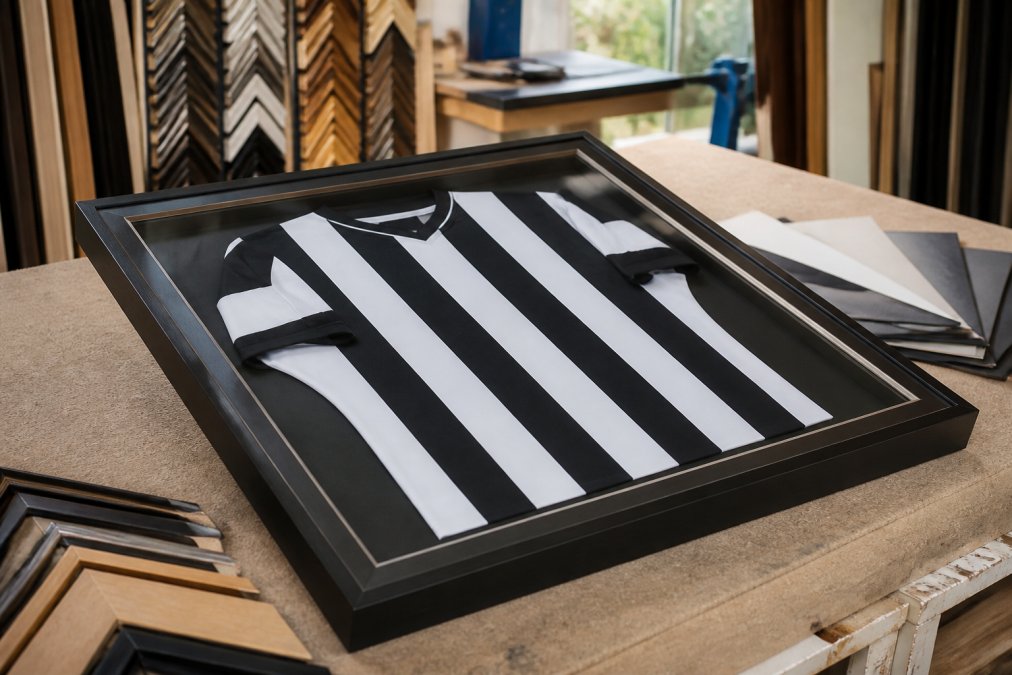
 how-to
Custom Shadow Box Framing for Jerseys: A How-To Guide
Table of Contents
- What You'll Need: Materials and Tools for Shadow Box Framing
- Understanding Shadow Box Depth Requirements for Jerseys
- How to Mount a Jersey for Framing
- Archival Framing Standards for Sports Memorabilia
- Choosing the Right Frame and Glass for Your Jersey
- Common Mistakes to Avoid When Framing Jerseys
- Frequently Asked Questions
Last Updated: September 19, 2026
What You'll Need: Materials and Tools for Shadow Box Framing
Framing a jersey properly requires specific materials designed to protect and display your piece safely. You cannot use standard picture-frame supplies here, the weight and structure of a jersey demand purpose-built components.
Start with a shadow box frame. This is a deep frame, typically 5-10 cm deep, that holds three-dimensional objects. The depth matters because a jersey needs room to sit without crushing or folding unnaturally. A shallow frame will bunch the fabric and damage it over time.
You'll also need:
- Acid-free mounting board or foam board
- Archival-quality thread (polyester, not cotton)
- Stainless steel or archival pins
- Acid-free tape (linen or pH-neutral)
- Archival tissue paper
- Glass or acrylic front panel (UV-protective if possible)
- Backing board (acid-free)
The key word here is archival. Archival materials are treated to resist deterioration and won't yellow, fade, or damage your jersey over decades. Standard craft supplies contain acids that migrate into fabric and cause permanent staining and weakness.
Your jersey is likely valuable, either financially or sentimentally, and it deserves protection that will last generations, not just years.
Understanding Shadow Box Depth Requirements for Jerseys
The depth of your shadow box directly affects how well your jersey displays and how safely it sits inside. This is not a cosmetic choice, it's a functional one that changes the whole framing outcome.
Most jerseys need between 5 and 10 centimetres of depth. A standard football or rugby shirt, laid flat or folded once, requires roughly 7-8 cm. Thicker vintage jerseys or those with embroidered patches might need closer to 10 cm. If your frame is too shallow, the jersey will compress against the glass, creating creases that won't disappear and trapping moisture that causes mildew.
Too much depth is also a problem. A 15 cm frame for a standard jersey creates empty space behind the fabric. The jersey can shift during transport or movement, and dust settles into the void. You want the jersey to sit snugly but not compressed.
Measure your jersey carefully. Lay it flat, fold it once if that's how you plan to display it, and measure the resulting thickness at its thickest point (usually where the collar and shoulders overlap). Add 1-2 cm for the mounting materials, and that's your target frame depth.
For custom shadow box framing for jerseys, getting the depth right prevents damage and ensures the piece looks intentional rather than accidentally stuffed into a box.
How to Mount a Jersey for Framing
Preparing the Jersey
Before the jersey touches any mounting materials, prepare it properly. A clean jersey is less likely to stain or deteriorate. Inspect it for loose threads, holes, or stains. If it's visibly dirty, have it professionally cleaned by someone experienced with sports textiles, regular dry cleaning can damage vintage fabrics.
Once clean, lay the jersey flat on acid-free tissue paper. Never use regular paper towels or newspaper; the ink and acid will transfer to the fabric. Let it air dry completely if you've just cleaned it. Any moisture trapped in the frame will cause mildew.
Positioning and Securing the Jersey
Decide how you want the jersey positioned before you start securing it. Will it hang flat, or will you fold it once to show the front and back? Lay it out on the mounting board and step back. This is your last chance to change your mind without disturbing the fabric.
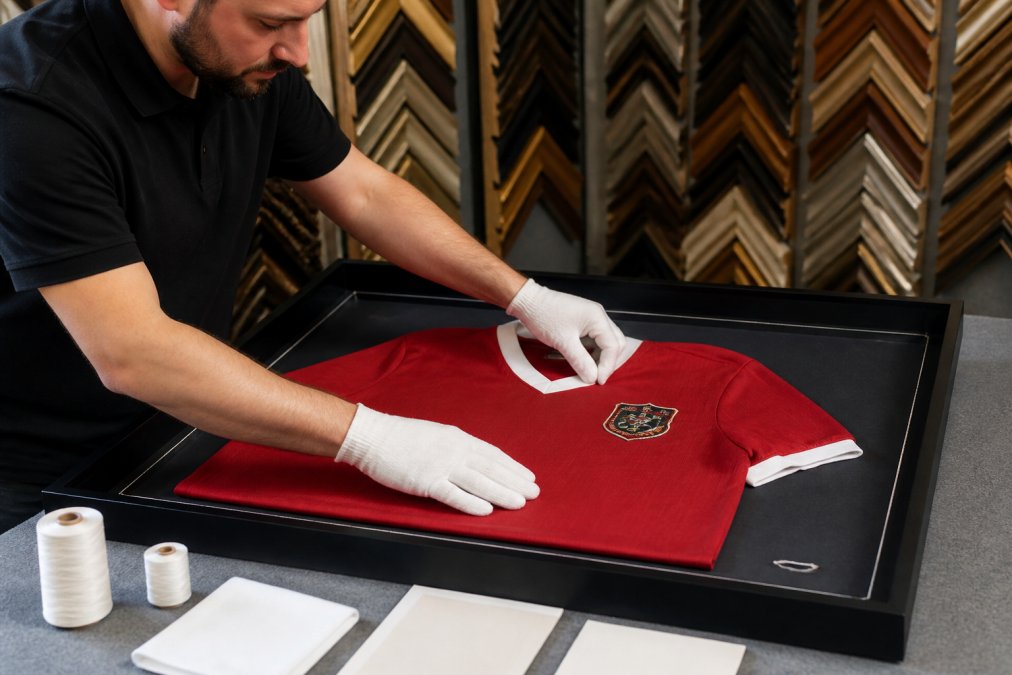
Use archival thread and a needle to stitch the jersey to the mounting board. Stitch through the seams whenever possible, never pierce the main body of the fabric. Work on the inside seams: the shoulder seams, the side seams, and the hem. Small stitches spaced 5-8 cm apart are enough to hold the jersey securely without creating visible marks.
If the jersey has a collar, stitch the back of the collar to the board. If there are sleeves, stitch the inside of the armholes or the underside of the sleeves. The goal is to anchor the jersey so it won't shift, but to hide every stitch.
For jerseys with numbers or embroidered patches, avoid stitching through these areas. Instead, use archival-quality pins placed underneath the jersey, through the mounting board. These pins hold the corners and edges in place without damaging the embroidery.
Never use glue or adhesive. Adhesive is permanent, and if you ever need to remove the jersey (for conservation or display changes), glue will tear the fabric. Thread and pins are reversible.
Archival Framing Standards for Sports Memorabilia
Archival standards exist because textiles deteriorate. Acid, light, humidity, and temperature changes all damage fabric over time. Archival framing standards slow this process dramatically.
The core principle is isolation. Your jersey should never touch materials that contain acid, lignin, or other chemicals. This means:
- All paper, board, and mounting materials must be acid-free and lignin-free
- Fabric used in the frame (tape, thread, tissue) must be 100% natural fibre or polyester
- Glass or acrylic should block ultraviolet light
- The frame should allow air circulation but prevent dust infiltration
Many standard frames fail these tests. Cheap mounting board contains wood pulp, which acidifies over time and stains whatever touches it. Regular paper tape yellows and becomes brittle. Standard glass transmits UV light, which fades colours and weakens fabric fibres.
For custom shadow box framing for jerseys, following archival standards is not optional if you want the jersey to survive intact. A vintage jersey from the 1970s or 1980s is already 40-50 years old. Poor framing can reduce its lifespan by decades.
The Fine Art Trade Guild publishes guidelines on archival framing practices. Their standards are widely recognised across the UK as the benchmark for professional conservation-quality work.
Choosing the Right Frame and Glass for Your Jersey
The frame itself is structural and aesthetic. You need wood or aluminium that won't warp, won't contain acid, and suits your décor. Solid wood frames are traditional and warm. Aluminium frames are modern and stable.
The colour and style of the frame matter. A dark wood frame suits a vintage or traditional jersey. A sleek aluminium frame suits a modern display. Some people choose a frame colour that matches the dominant colour of the jersey; others contrast deliberately. There's no single right answer, it depends on your space and taste.
Glass or acrylic is more critical than frame material. Standard clear glass transmits ultraviolet light, which fades dyes and weakens fabric. UV-protective glass or acrylic blocks 99% of UV radiation. It costs more but is worth it for any jersey with sentimental or financial value.
Acrylic is lighter than glass and shatterproof, making it better for large jerseys or homes with children or pets. Glass is clearer and more scratch-resistant. Both can be anti-reflective, which reduces glare and makes the jersey easier to view.
For custom shadow box framing for jerseys, the glass choice affects how the piece looks every time you look at it. Invest in UV protection and anti-reflective coating if your budget allows.
Common Mistakes to Avoid When Framing Jerseys
The biggest mistake is using standard picture-frame materials. A jersey is not a print. It's a three-dimensional object made of delicate fabric. Standard frames don't account for this.
Another frequent error is over-securing the jersey. Some people use too much thread or glue, thinking more is safer. This actually increases damage risk. Over-stitching creates visible marks and puncture holes. Excess glue hardens and cracks, pulling fabric with it. Secure the jersey lightly, thread through seams only, pins underneath only.
Moisture is another common problem. Jerseys stored in damp cellars or humid rooms develop mildew. The frame should allow air circulation. Avoid sealed frames that trap moisture. If your home is humid, consider a frame with small vents or use silica gel sachets inside the frame (placed where they won't touch the jersey).
Sunlight fades jerseys quickly. Never hang a framed jersey in direct sunlight or opposite a window. The UV light will fade colours within months. Place it on an interior wall with indirect light.
Poor positioning is also common. People rush the mounting step and don't step back to assess how the jersey looks before securing it permanently. Spend time arranging it. Once you've stitched it, repositioning is difficult and risks damaging the fabric.
Finally, avoid cheap glass. Reflective standard glass makes the jersey hard to see and looks cheap. Anti-reflective glass costs more but transforms the display. The jersey becomes the focal point instead of the glare on the frame.
Framing a jersey properly takes time and the right materials, but the result is a display piece that will last decades without deterioration.
Frequently Asked Questions
What is the best way to mount a jersey in a shadow box?
The best approach uses archival-quality materials and secure-but-reversible methods. Position the jersey flat or folded naturally, then use acid-free thread or polyester webbing to anchor it at key points, typically the shoulders and sides. Avoid nailing, gluing, or using staples directly on the fabric. This preserves the jersey whilst keeping it stable. Professional framing services use conservation-grade techniques to ensure your memorabilia remains undamaged and can be removed without harm if needed.
What depth of shadow box is required for a sports jersey?
Most jerseys require a shadow box depth of 5-10 centimetres. A standard folded jersey typically needs 5-7 centimetres, whilst a jersey displayed flat or layered with additional memorabilia (medals, photographs, certificates) may need 8-10 centimetres. The depth must accommodate the jersey's thickness without compressing it, which can cause creasing and damage over time. Measure your specific jersey before commissioning a frame to ensure proper fit and visual balance.
Are there archival standards for framing sports memorabilia?
Yes. Archival standards for sports memorabilia prioritise acid-free materials, UV-protective glass or acrylic, and reversible mounting methods. Use acid-free boards, mounts, and backing to prevent yellowing and deterioration. UV-filtering glazing protects against fading from sunlight. Avoid PVC-based materials and adhesives that can damage fabric over decades. Many professional framers follow conservation guidelines recognised by heritage organisations. These standards ensure your jersey and related items remain in excellent condition for years to come.
Should I use glass or acrylic for jersey framing?
Both have merits. Glass offers superior clarity and scratch resistance, making it ideal for valuable or heirloom jerseys. Acrylic is lighter, more impact-resistant, and offers better UV protection, making it suitable for high-traffic areas or homes with children and pets. For archival purposes, choose UV-filtering options in either material to prevent fading. Consider the jersey's value, your home's environment, and where the frame will hang. Professional framers can advise which option best suits your specific piece and display location.