 how-to
Custom Picture Framing: A How-To Guide
Table of Contents
- What to Expect from Custom Picture Framing
- Preparing Your Artwork for the Framing Process
- How to Choose a Picture Frame Mount
- Understanding Conservation Framing Standards
- Selecting Frame Materials and Finishes
- Bespoke Picture Framing Costs: What Affects the Price
- The Timeline for Custom Picture Framing
- Common Mistakes to Avoid When Commissioning Framing
- Frequently Asked Questions
Last Updated: 25 September 2026
What to Expect from Custom Picture Framing
Custom picture framing transforms how you present your art, photography, and memorabilia. Unlike off-the-shelf frames, bespoke framing solutions are tailored entirely to your piece, its dimensions, materials, condition, and aesthetic vision. At HF Framing ltd, we work with art collectors, photographers, and gallery owners across London to create frames that enhance and protect valuable work.
The process begins with understanding your piece. A professional framer examines the artwork, discusses your goals, and recommends materials and mounting techniques that suit both the item and your space. This consultation is where the real value emerges, a framer's expertise prevents costly mistakes and ensures longevity.
Custom picture framing typically involves several stages: initial consultation, artwork assessment, material selection, mount design, frame construction, and final assembly. Each stage requires specific decisions that affect the final outcome. The timeline varies depending on complexity, materials sourced, and current workload, but most projects take several weeks from start to finish.
What sets custom framing apart is precision. A professional frame is cut to exact dimensions, assembled with archival-quality adhesives, and finished with attention to detail that mass-produced frames cannot match. The result is a presentation that looks intentional, protects your piece, and integrates seamlessly into your home or gallery space.
Preparing Your Artwork for the Framing Process
Before you bring a piece to a framer, basic preparation makes the consultation more productive. Clean the glass or acrylic if your work is already under glazing, but avoid harsh chemicals that might damage the surface. For unframed artwork, handle it carefully and avoid touching the surface with bare hands, oils from skin can mark prints and paintings.
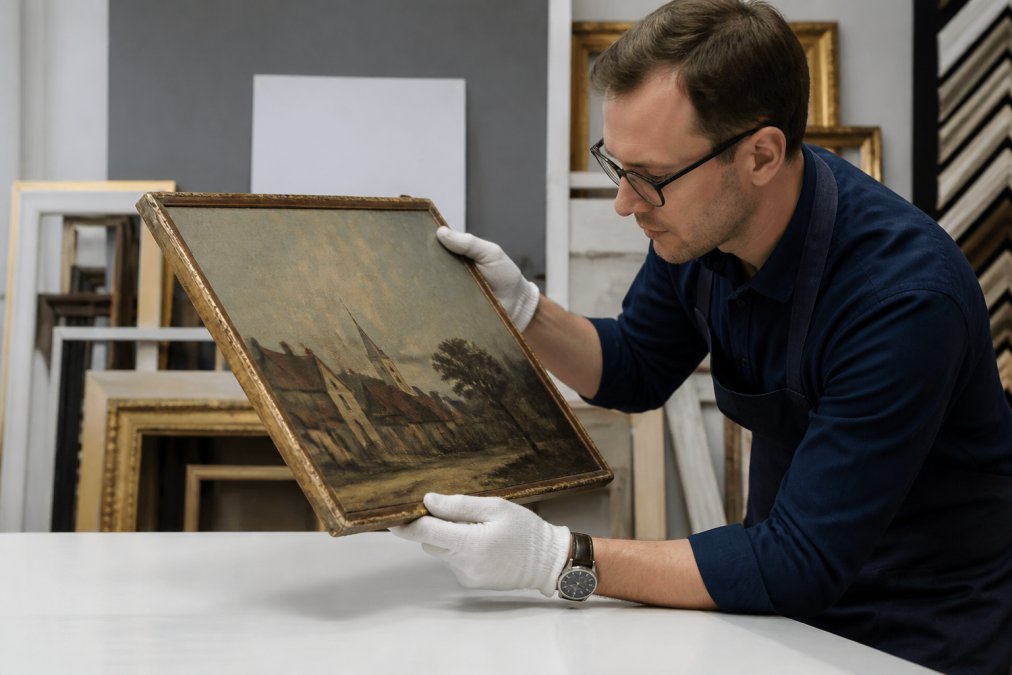
Document the piece's dimensions if you know them, but don't measure it yourself if it's valuable or fragile, let the framer do this. If your artwork has existing damage, note it clearly so the framer can work around it or address it appropriately. Photographs help too: if you're framing multiple pieces, bring images of your space so the framer can visualise how frames will look together.
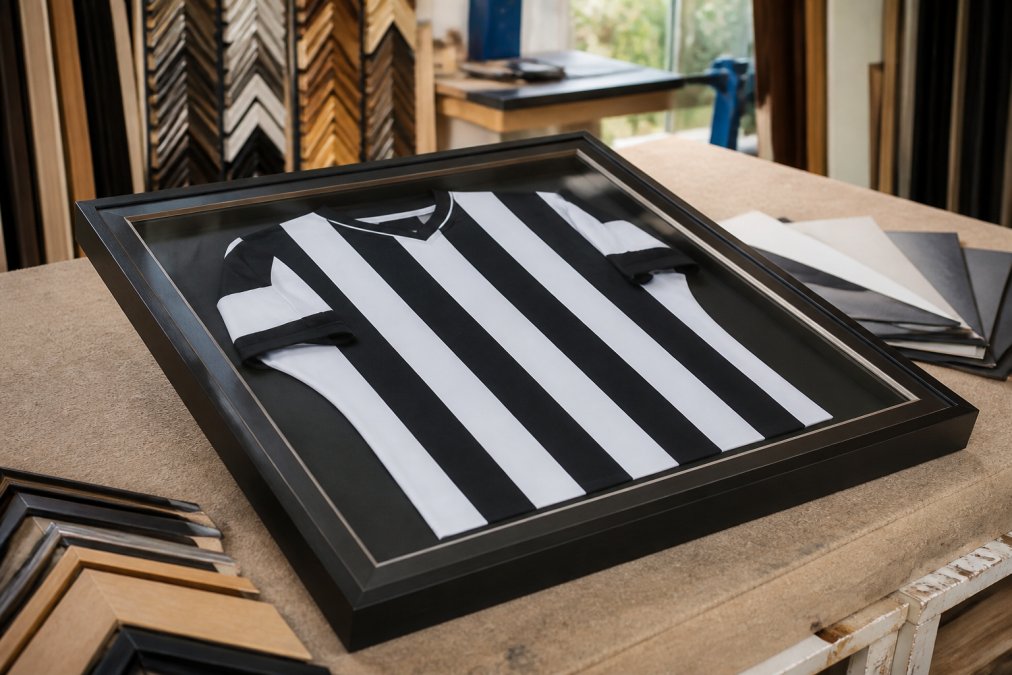
For items with sentimental value, share their story. A framer who knows whether you're displaying a family heirloom, a commissioned photograph, or a sports memento can make recommendations that honour the piece's significance. This context also helps explain why certain conservation standards matter for your specific work.
If you're framing something valuable or irreplaceable, consider having it professionally cleaned before framing. A conservator can assess condition, remove accumulated dirt or damage, and prepare the piece safely. This is especially important for oil paintings, textiles, and antique prints.
How to Choose a Picture Frame Mount
A picture frame mount is the material that sits between your artwork and the frame itself, typically acid-free paper or board that holds the piece in place. The mount serves both aesthetic and protective functions, so choosing correctly is crucial.
The first decision is whether your piece needs a window mount or a flush mount. A window mount has an opening cut to display only the central image, creating a border effect that draws focus to the artwork. A flush mount displays the entire piece, including edges or borders. Window mounts work well for prints and photographs; flush mounts suit pieces with intentional borders or edges you want visible.
Colour and texture matter significantly. A neutral mount, cream, white, or soft grey, complements most artwork without competing for attention. Darker mounts can add sophistication for contemporary pieces, but they must contrast appropriately with both the artwork and the frame. A framer can show you samples to test combinations before committing.
Material quality directly affects preservation. Acid-free mounts prevent yellowing and deterioration over decades. For valuable or irreplaceable pieces, conservation-grade mounts with lignin-free materials offer the highest protection. Standard mounts work fine for decorative pieces, but the difference in cost is modest, investing in better mounts extends the life of your framing significantly.
Thickness also influences appearance. A thin mount feels delicate and modern; a thicker mount creates a more traditional, formal presentation. The proportion between mount width and artwork size affects balance, a small print typically needs a wider mount than a large painting.
Understanding Conservation Framing Standards
Conservation framing standards exist to protect artwork from damage, fading, and deterioration. These standards guide material selection and assembly techniques that preserve pieces for decades or centuries.
The core principle is using materials that won't damage artwork over time. Acid-free mounts, lignin-free paper, and UV-filtering glass all prevent common problems like yellowing, brittleness, and fading. According to guidance from the British Library on preservation standards, archival-quality materials are essential for items you intend to keep long-term.
Mounting techniques matter equally. Reversible mounting, where artwork is held in place without permanent adhesive, allows future conservators to remove and restore pieces if needed. For valuable work, this approach is standard. Non-reversible methods (gluing or permanent adhesive) are acceptable for less valuable pieces, but reversible methods are always preferable if budget allows.
Glazing choices affect both protection and appearance. Standard glass protects from dust and handling but doesn't filter ultraviolet light, which causes fading. UV-filtering glass or acrylic blocks up to 99% of harmful rays, significantly extending colour vibrancy. For pieces displayed in direct sunlight, UV protection is worth the additional cost.
Spacing between artwork and glass prevents condensation and mould growth. A small gap, typically created by the thickness of the mount, allows air circulation and protects the piece from moisture damage. Sealed frames that trap air are generally avoided for valuable work.
Selecting Frame Materials and Finishes
Frame materials range from wood to metal, each offering different aesthetics and durability. The choice depends on your artwork's style, your space, and how the frame will age.
Wood frames are the most common choice. Hardwoods like oak, walnut, and maple offer warmth and traditional appeal. Softwoods like pine are lighter and less expensive but less durable. Stained wood can be dark, natural, or golden; painted wood offers any colour imaginable. Wood frames work beautifully with paintings, textiles, and traditional prints. They're also easy to repair or refinish if damaged.
Metal frames, typically aluminium or steel, suit contemporary artwork, photography, and minimalist spaces. Metal is durable, won't warp, and comes in finishes from polished silver to matte black. Metal frames are lighter than wood, making them practical for larger pieces. They're also excellent for pieces displayed in damp environments, as metal won't absorb moisture.
Finish quality affects longevity. A quality varnish or lacquer protects wood from dust and minor damage. Painted finishes should be applied evenly and cured properly to prevent chipping. Metal frames benefit from protective coatings that prevent oxidation and maintain appearance.
The frame's profile, its width and depth, influences visual weight. A narrow profile creates a minimalist look; a wider profile adds formality and presence. Decorative profiles with moulding suit traditional artwork; clean, simple profiles complement contemporary work.
Consider how the frame will interact with your space. A frame that matches existing furniture creates cohesion; a contrasting frame can serve as a focal point. The colour should complement both the artwork and surrounding décor without overwhelming either.
Bespoke Picture Framing Costs: What Affects the Price
Custom picture framing costs depend on several interconnected factors. Understanding these helps you make informed decisions about where to invest and where to economise.
Artwork size is the primary cost driver. Larger pieces require more materials, more mount board, more frame moulding, larger glazing panels. A small 20cm × 25cm print costs significantly less than a 60cm × 90cm painting. Size also affects labour time, as larger pieces require more careful handling and assembly.
Material quality represents the next major variable. A basic wood frame with standard glass costs less than a premium hardwood frame with museum-quality UV-filtering glass and conservation-grade mounts. For pieces you plan to keep for decades, higher-quality materials offer better protection and longevity. For decorative pieces displayed briefly, standard materials suffice.
Glazing choices substantially affect cost. Standard glass is the least expensive option. UV-filtering glass costs more but protects against fading. Museum-quality acrylic, which is non-reflective and extremely durable, costs even more. For valuable or irreplaceable artwork, the investment in better glazing is worthwhile.
Mount materials vary in price. Standard acid-free mounts are affordable. Conservation-grade mounts with lignin-free materials cost more but offer superior preservation. If you're framing family heirlooms or valuable art, conservation mounts justify the expense.
Custom features add cost. Multiple window mounts, unusual shapes, special mounting techniques, and bespoke frame designs all increase the price. Simple, straightforward frames cost less than complex, customised solutions.
For an accurate quote, contact a framer with details of your piece's dimensions, materials, and your preservation priorities. Most framers offer consultations where they assess your work and provide pricing based on your specific requirements.
The Timeline for Custom Picture Framing
The timeline for custom picture framing varies, but understanding typical stages helps you plan accordingly.
Initial consultation usually takes 1-2 weeks to schedule and complete. During this meeting, the framer examines your artwork, discusses your vision, and recommends materials and styles. You'll review samples, decide on mounts and frames, and place your order. This stage is crucial, rushing it often leads to regrets.
Once you've approved the design and paid any deposit, production begins. For straightforward projects, this takes 2-3 weeks. More complex framing projects, specialist mounting techniques or unusual materials may require additional time. We'll advise you of the expected completion date when discussing your order..
Sourcing materials adds time, particularly if you've chosen speciality mounts, rare wood frames, or imported glazing. Standard materials are readily available; custom or archival materials may need to be ordered. A framer should communicate expected timelines upfront.
Assembly and finishing are included within our usual 2–3-week turnaround for standard picture framing orders. The framer cuts mounts precisely, assembles the frame, installs the artwork, and applies final finishes. Quality workmanship takes time, rushing this stage compromises the result.
Final inspection and quality checks are included within our usual turnaround time. Once your framing is complete, we'll contact you to arrange collection. Delivery can also be discussed separately, subject to availability.
Our usual turnaround time at HF Framing is approximately 2–3 weeks for standard picture framing orders. Specialist projects or unusual materials may require additional time. If you have a particular deadline, such as an exhibition, special event or Christmas gift, please mention this during your consultation so we can advise on availability and completion times..
Common Mistakes to Avoid When Commissioning Framing
Understanding common pitfalls helps you make better decisions and avoid costly errors.
Skipping the consultation is the most frequent mistake. Ordering a frame online without professional advice often results in poor colour matching, inappropriate materials, or mounts that don't suit the artwork. A consultation prevents expensive mistakes.
Choosing materials based solely on price leads to regret. A cheap frame might look acceptable initially but can warp, fade, or deteriorate quickly. For pieces you plan to keep long-term, investing in better materials pays dividends. For temporary displays, basic materials are acceptable, but the decision should be intentional, not accidental.
Neglecting conservation standards for valuable work is risky. Family heirlooms, original paintings, and irreplaceable photographs deserve archival-quality treatment. The cost difference between standard and conservation framing is modest compared to the potential loss if your piece deteriorates.
Underestimating timelines causes stress. If you need framing for a specific date, book well in advance. Rushing a framer compromises quality and may incur rush fees. Plan for longer for complex projects.
Ignoring your space when choosing frames is a design mistake. A frame that looks beautiful in a showroom might clash with your décor or overwhelm your space. Bring photographs of your room or, better yet, ask the framer to visualise how the frame will look in context.
Assuming all framers are equivalent is another error. Framers vary significantly in skill, material quality, and attention to detail. A professional framer with experience in conservation and custom work delivers better results than a general picture-framing service. At HF Framing ltd, we specialise in bespoke solutions for art collectors and galleries.
Not communicating the piece's significance or your preservation goals leaves the framer guessing. Share whether you're framing a family heirloom, a valuable painting, a sports memento, or a decorative print. This context helps the framer recommend appropriate materials and techniques.
Failing to discuss your budget upfront can lead to disappointment. Framing costs vary widely. A clear budget discussion ensures the framer recommends options within your range rather than presenting expensive solutions you can't afford.
Custom picture framing transforms how you display and preserve artwork, photography, and memorabilia. The right frame, mount, and materials protect your pieces whilst enhancing their visual impact. When you're ready to frame something meaningful, whether it's a family heirloom, a commissioned photograph, or a valuable painting, professional guidance makes all the difference. HF Framing ltd offers expert consultation, archival-quality materials, and bespoke framing solutions tailored to your specific piece and space. Make a booking and discover how professional framing elevates your art.
Decision Point | Consideration | Impact |
|---|---|---|
Artwork size | Larger pieces cost more in materials and labour | Budget allocation |
Mount type | Window vs. flush affects aesthetics and cost | Visual presentation |
Glazing choice | Standard vs. UV-filtering affects protection | Long-term preservation |
Frame material | Wood, metal, or speciality materials | Style and durability |
Conservation standards | Archival-quality vs. standard materials | Piece longevity |
Timeline | 2 -3 weeks depending on complexity | Planning and deadlines |
Frequently Asked Questions
What is the difference between standard and conservation framing?
Standard framing prioritises appearance and cost-effectiveness, suitable for prints and posters. Conservation framing uses acid-free, archival-quality materials and techniques designed to preserve artwork long-term without degradation. It protects against UV damage, moisture, and chemical reactions that fade or damage valuable pieces. For family heirlooms, original art, or photographs you want to preserve for decades, conservation methods are essential.
How do I know if custom picture framing is worth the investment for my prints and photographs?
Custom framing adds value when your piece has sentimental or monetary worth, when you want archival protection, or when standard frames don't fit your artwork's dimensions or aesthetic. For valuable original art, family photographs, or pieces you plan to display permanently, bespoke framing ensures proper preservation and a polished presentation that mass-produced frames cannot match. Personal prints and everyday décor may not require this level of investment.
How long does custom picture framing usually take?
Timescales vary depending on frame availability, mount cutting, and workload. A straightforward project typically takes 2-3 weeks from consultation to completion. Complex commissions—multiple pieces, special materials, or intricate designs—may take longer. Discuss your deadline during the initial consultation so the framer can confirm whether your timeframe is achievable.
What should I look for when choosing a professional framer for valuable artwork?
Check whether the framer is trained in archival and conservation techniques, uses acid-free materials, and understands UV protection. Ask about their experience with your specific artwork type—paintings, textiles, photographs, or memorabilia. Membership in professional bodies such as the Fine Art Trade Guild indicates commitment to quality standards. Request references and examples of previous work, and clarify their handling procedures for delicate or valuable pieces.